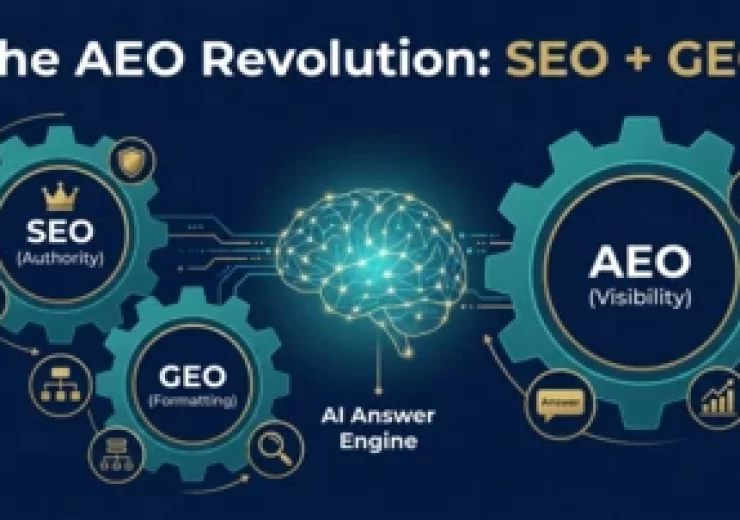
Generative Engine Optimization (GEO) is the practice of structuring content so AI-powered search engines can extract, interpret, and surface it within generated responses. Benchmarking GEO gives businesses a clearer way to evaluate how often their content appears inside AI-assisted search environments such as ChatGPT, Gemini, and Perplexity.

AI SEO services that include GEO focus on improving content clarity, entity relevance, and structured information so search systems can better understand the relationship between topics, services, and user intent. That shift matters because AI-generated answers now influence how users research products, services, and brands before they ever visit a website directly.

When businesses benchmark GEO performance, they can better evaluate which content structures, trust signals, and search formats improve discoverability across AI-powered search systems. The foundation of that process starts with understanding what Generative Engine Optimization is and how it works alongside AI-powered SEO technology solutions.

What is Generative Engine Optimization (GEO)?

What is Generative Engine Optimization (GEO)? Generative Engine Optimization (GEO) is a search optimization strategy focused on helping AI systems interpret, organize, and surface content within generated answers to user prompts.

Unlike older SEO strategies that relied heavily on isolated keyword placement, GEO focuses more on contextual clarity, structured formatting, topical relationships, and direct-answer content models that AI systems can process efficiently.

This approach places stronger emphasis on factual structure, semantic relevance, and clearly organized content sections rather than producing large volumes of loosely connected pages. Content built for GEO is designed to support both traditional search visibility and AI-assisted discovery.

There is also a growing distinction between content optimized primarily for clicks and content optimized for extraction inside AI-generated answers. AI systems often prioritize content that answers questions directly, organizes information clearly, and reinforces entity relationships across topics.

DIGITTO Media applies GEO principles through AI-powered SEO technology solutions that support discoverability across both traditional search engines and generative search environments. This approach allows businesses to strengthen visibility while aligning SEO services, Local SEO, National SEO, and Enterprise SEO strategies with evolving search behavior.

How to Implement GEO in AI SEO

Implementing GEO follows five practical steps that help transition content from traditional optimization models into AI-assisted search visibility.

  1. Structure content around direct-answer formatting. AI systems often process concise, well-organized explanations more effectively than long blocks of generalized copy.
  2. Use clear attribution and source framing when discussing industry concepts or technical information. Structured references help reinforce topical credibility and contextual clarity.
  3. Include measurable examples, definitions, and entity relationships within the content. AI systems rely heavily on context and topical association when evaluating relevance.
  4. Organize pages into focused sections that address one primary question or concept at a time. Structured segmentation improves readability for both users and AI-assisted search systems.
  5. Align content with broader business systems, including PPC advertising, digital marketing automation, and Marketing CRM platform integrations, so visibility data connects with lead tracking and conversion workflows.

GEO works most effectively when businesses treat it as part of a larger digital marketing system rather than an isolated SEO tactic.

Questions About GEO in AI SEO Answered

Here are answers to common questions businesses ask when integrating GEO into AI SEO services.

Does GEO replace traditional SEO?

GEO works alongside traditional SEO rather than replacing it. Technical SEO, crawlability, structured site architecture, and authority signals still support visibility across both traditional and AI-assisted search systems.

How does AI decide which content to surface?

AI systems generally prioritize content with strong contextual relevance, organized formatting, direct-answer structures, and clear topical relationships tied to the user’s search intent.

Is GEO relevant for Local SEO and National SEO campaigns?

GEO can support both local and national visibility strategies because AI systems increasingly generate responses tied to conversational and location-specific queries.

How does GEO connect with lead generation?

GEO contributes to discoverability earlier in the research process, which can strengthen long-term visibility and improve how businesses appear during comparison and decision-making stages.

Limitations and Risks of GEO in AI SEO

This section covers five key limitations and tradeoffs businesses should understand before relying too heavily on GEO within an AI SEO strategy.

  1. AI interpretation risk: Even well-structured content can be summarized incorrectly or interpreted out of context by generative systems.
  2. No guaranteed visibility: GEO can improve discoverability signals, but AI-generated search environments do not provide direct control over when or how content appears.
  3. Attribution challenges: AI-generated answers may reduce direct website visits in some situations, making traditional traffic attribution more difficult to evaluate.
  4. Content quality dependency: GEO requires structured, accurate, and consistently maintained content across multiple channels and platforms.
  5. SEO and GEO separation risk: Treating GEO as completely separate from SEO can weaken broader search visibility because traditional SEO authority still influences discoverability across AI systems.

Businesses using GEO benchmarks should view them as directional performance indicators rather than isolated success metrics. Search visibility, AI-assisted discovery, lead quality, and conversion trends all contribute to a more complete measurement framework.

GEO Benchmarks and Long-Term Search Visibility

GEO benchmarking helps businesses evaluate how effectively their content supports discoverability inside AI-generated search environments. Structured content, direct-answer formatting, and strong entity alignment often improve how AI systems interpret and organize information across topics.

However, GEO works best when combined with broader SEO services, PPC advertising strategies, and digital marketing automation systems that connect visibility data with lead generation and conversion tracking.

DIGITTO Media approaches AI SEO services through an integrated framework that combines Generative Engine Optimization, traditional SEO, PPC advertising, and Marketing CRM platform alignment into a unified search visibility strategy. This creates a more complete view of how businesses perform across both traditional search engines and evolving AI-powered discovery systems.

As AI-assisted search behavior continues changing, organizations that structure content around clarity, contextual relevance, and measurable search performance will be better positioned to support long-term digital visibility.

Businesses reviewing their current SEO strategy should evaluate how well their content supports AI readability, entity relationships, structured formatting, and conversion-focused search visibility across both traditional and generative search environments.

Learn more about DIGITTO Media’s AI SEO services, Generative Engine Optimization strategies, Enterprise SEO, Local SEO, National SEO, PPC advertising, and digital marketing automation solutions at https://www.digittomedia.com/services.